

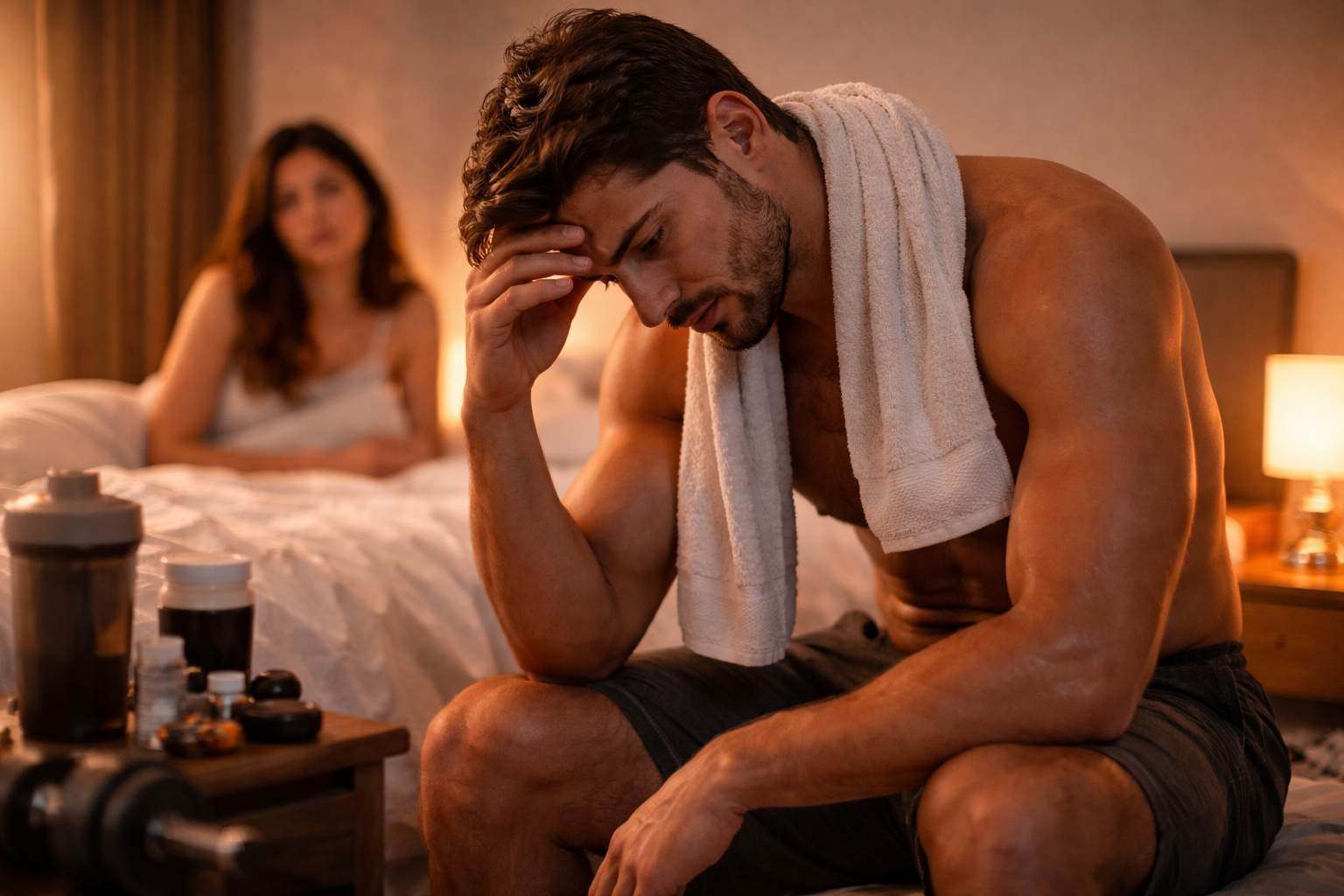
Overtraining is niet alleen een zorg voor atleten of bodybuilders—het kan serieuze gevolgen hebben voor je seksuele welzijn, hormoonbalans en prestaties op de lange termijn. Regelmatige lichaamsbeweging verhoogt het testosteron, verbetert de doorbloeding en ondersteunt seksuele vitaliteit, maar te vaak over je grens gaan kan overtrainingssyndroom uitlokken, met laag libido, erectiestoornissen (ED) en een reeks hormonale verstoringen tot gevolg.
In dit artikel bespreken we hoe trainingsintensiteit en trainingsduur je hormonale as kunnen veranderen, je vaatgezondheid kunnen ondermijnen en kunnen bijdragen aan klachten als seksuele vermoeidheid, impotentie en emotionele uitputting. We laten ook zien hoe je de waarschuwingssignalen van overtraining herkent, wat de fysiologische tol is, en vooral—hoe je een gezonde balans tussen inspanning en herstel vindt die je prestaties in de slaapkamer én je gemoedsrust behoudt.
Wanneer te veel van het goede averechts werkt
We weten allemaal hoe essentieel beweging is voor de algehele gezondheid van mannen—en dat is ook zo. Matige en consistente lichaamsbeweging helpt testosteronniveaus te reguleren, verbetert de cardiovasculaire functie en ondersteunt de doorbloeding van de penis, een belangrijk onderdeel van opwinding en prestaties.
Maar zoals bij elk krachtig hulpmiddel kan verkeerd gebruik tegen je werken. Dat is de keerzijde van high-intensity training en chronische duurtraining: een spiraal van hormonale disbalans, verlaagd libido en uiteindelijk seksuele disfunctie.
“Meer is niet altijd beter—zeker niet wanneer je lichaam geen tijd krijgt om te herstellen.”
De verborgen hormonale nasleep
Het eerste ‘slachtoffer’ van overmatige training is vaak het endocriene systeem. De hormonale as—verantwoordelijk voor het aansturen van sleutelspelers als testosteron, LH (luteïniserend hormoon) en FSH (follikelstimulerend hormoon)—kan ernstig ontregeld raken bij langdurige fysieke overbelasting.
Deze neuro-endocriene ontregeling kan leiden tot:
- Laag testosteron (ook wel hypogonadisme genoemd)
- Verhoogd cortisol, wat testosteron onderdrukt
- Onderdrukking van FSH en LH, met verminderde spermaproductie en libido als gevolg
Op termijn dragen deze effecten bij aan vruchtbaarheidsproblemen, seksuele angst en zelfs problemen met de psychoseksuele gezondheid, zeker in combinatie met prestatiedruk of lichaamsbeeldverwachtingen vanuit de gymcultuur.
Niet alleen tussen je oren: fysieke signalen van overtraining
Vermoeidheid of een traag libido afdoen als “gewoon stress” is makkelijk, maar er zit een fysiologisch mechanisme achter—je lichaam probeert een rode vlag te hijsen.
Signalen dat je mogelijk overtraint:
- Verminderde zin in seks en minder of geen ochtenderecties
- Aanhoudende vermoeidheid en slaapproblemen
- Terugval in sportprestaties ondanks meer trainen
- Langdurige spierpijn of blessure
- Stemmingsklachten, waaronder emotionele uitputting of prikkelbaarheid
Deze symptomen lijken sterk op die van het overtrainingssyndroom, een toestand met langdurige hersteltekorten die zowel sportieve als seksuele prestaties beïnvloedt.
Seksuele prestaties beginnen bij doorbloeding
Een kernaspect van seksuele gezondheid is doorbloeding. Verwijding van haarvaten, vaatgezondheid en hartfunctie spelen direct een rol in erectiele stevigheid en uithoudingsvermogen. Met duurtraining verbeter je deze functies—totdat je de grens naar overtraining overschrijdt.
Op dat punt draaien de voordelen om. Het cardiovasculaire systeem raakt belast, de doorbloeding van de penis kan afnemen en impotentie wordt een reëel risico. Chronische overtraining is zelfs in verband gebracht met erectiestoornissen, vooral bij sporters met langdurige of extreem intensieve schema’s.
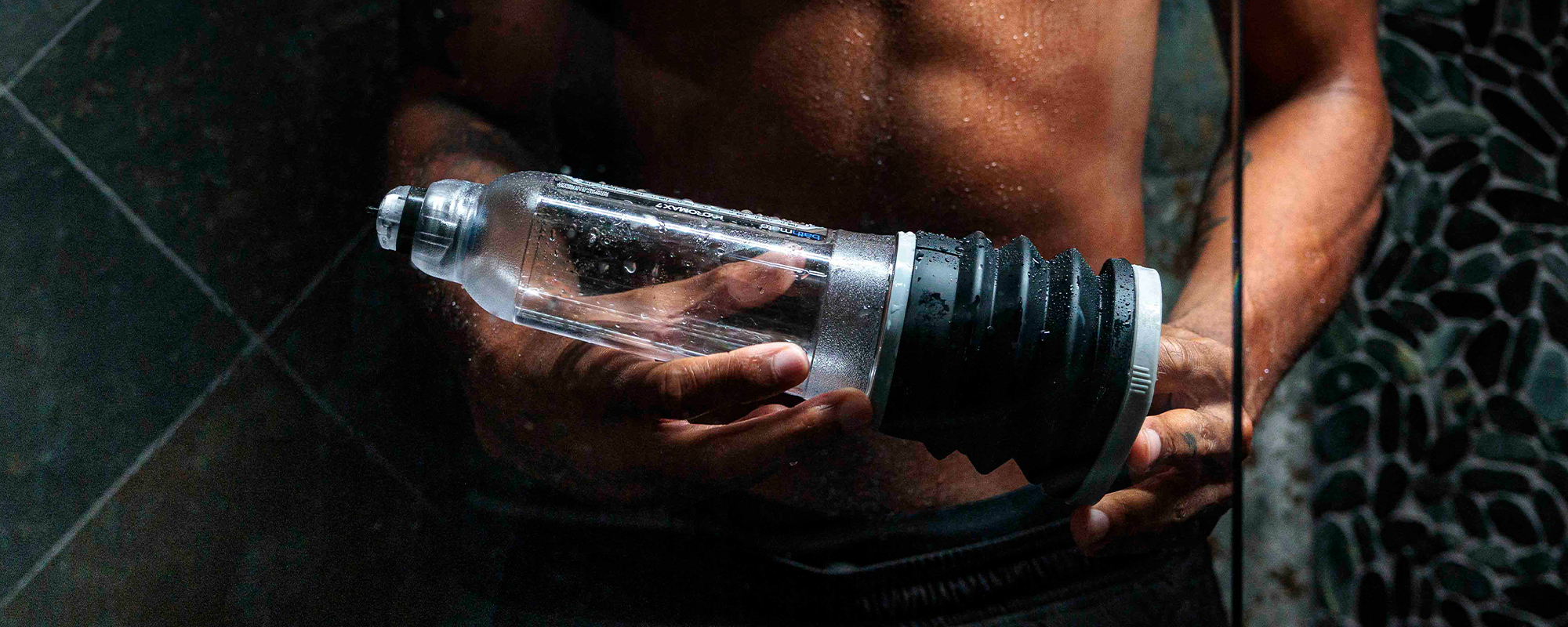
Om een gezonde doorbloeding te ondersteunen, zijn onze Hydro Series penispompen ontworpen om de doorbloeding van de penis op natuurlijke wijze te verbeteren—een waardevol hulpmiddel voor wie herstelt van prestatiegerelateerde uitdagingen.
De kloof tussen lichaam en geest – wanneer fitness een obsessie wordt
Hoe krachtig de fysiologische gevolgen van overtraining ook zijn, de psychologische impact is vaak net zo ingrijpend—en veel subtieler. Wanneer trainingen van een gezonde gewoonte in een dwangmatige behoefte veranderen, train je niet langer je lichaam; je traint je identiteit.
Bewegingsverslaving & druk door het lichaamsbeeld
Wat begint als het doel om “in vorm te komen” kan ontaarden in bewegingsverslaving, zeker wanneer prestatie of uiterlijk je gevoel van eigenwaarde bepaalt. Deze mentale staat is een voedingsbodem voor:
- Seksuele angst
- Aangetaste psychoseksuele gezondheid
- Chronische emotionele uitputting
- Onophoudelijke prestatiedruk
Mannen in deze cyclus zien de tol vaak pas wanneer hun seksuele vitaliteit begint af te nemen. Het is niet ongebruikelijk dat wie lijdt aan bewegingsverslaving blijft doorduwen terwijl het lichaam afbrandt—met burn-out door trainen, laag libido en uiteindelijk seksuele disfunctie tot gevolg.
“Als je lichaam om rust schreeuwt en je geest zegt dat je harder moet gaan, is er iets uit balans.”
Doorbreek de cyclus: hormonaal herstel begint met bewustwording
De gevolgen van overtraining keren vraagt meer dan een paar dagen rust. Echt hormonaal herstel is een systemische herkalibratie die alles raakt—van slaap en stress tot voeding en supplementen.
Praktische stappen om te beginnen met herbalanceren:
- Evalueer je routine
Train je meer dan 6 dagen per week zonder variatie in intensiteit of rust? Overweeg trainingsperiodisering—een methode die varieert in intensiteit en herstelfases om burn-out te voorkomen. - Geef prioriteit aan rust en slaap
Herstel is niet passief—dán repareert je lichaam en worden hormonen als testosteron en GH (groeihormoon) geproduceerd. - Ondersteun de testosteronproductie
Natuurlijke suppletie, slimme voeding en tools voor seksueel welzijn zoals Bathmate’s Max Out Jelqing Serum kunnen de doorbloeding helpen bevorderen en de hormonale balans tijdens herstel ondersteunen. - Stel je voeding scherper af
Tekorten—vooral aan zink, magnesium en essentiële vetzuren—kunnen laag testosteron en LH-onderdrukking verergeren. - Volg je mentale gezondheid
Hoge cortisolspiegels door chronische stress of dwangmatig trainen gaan vaak samen met dalend libido en verminderde seksuele prestaties.
De terugkeer van seksuele vitaliteit: wat kun je verwachten
Wanneer je een meer gebalanceerde trainingsaanpak toepast, merken veel mannen binnen 4–6 weken verbeteringen:
- Weer ochtenderecties
- Verbeterd libido en seksuele conditie
- Minder vermoeidheid en meer energie
- Betere slaap en stabielere stemming
- Een sterkere connectie tussen lichaam en geest tijdens intimiteit
Dit zijn signalen dat je voortplantingsgezondheid stabiliseert. Het is ook een herinnering dat herstel geen zwakte is—maar een strategie.
Werk je aan het terugwinnen van je seksuele prestaties? Overweeg dan om de Bathmate’s HydroXtreme Series in je dagelijkse routine op te nemen. Het drukgereguleerde systeem is ideaal om de doorbloeding van de penis te ondersteunen en herstel te bevorderen tijdens perioden van hormonale schommelingen.
Een duurzame levensstijl voor prestaties—in én buiten de gym
Vraag je je weleens af waarom je zin in seks achterblijft terwijl je “in de beste vorm van je leven” bent? Het antwoord ligt mogelijk in wat je training je niet geeft—balans. Stop met in extremen denken. Noch traagheid, noch obsessie helpt je lichaam of je seksuele gezondheid.
Richt je in plaats daarvan op een duurzame fitnesslevensstijl op de lange termijn—één die libido, vaatgezondheid en hormonale balans ondersteunt zonder je plezier in beweging op te offeren.
Je training personaliseren om overtraining te voorkomen
De sleutel om het overtrainingssyndroom en de bijbehorende effecten—zoals impotentie, vermoeidheid en prestatieachteruitgang—te vermijden, is personalisatie. Wat werkt voor een toptriatleet, werkt waarschijnlijk niet voor iemand met een 9-tot-5, gezinsleven en stress.
Zo stem je je training af op je seksuele vitaliteit en algehele welzijn:
1. Oefen met trainingsperiodisering
Wissel weken met hoge, matige en lage intensiteit af. Zo krijgt je endocriene systeem de kans om te herkalibreren en hormonaal te herstellen. Voeg mobiliteit- en actieve hersteldagen toe voor het beste resultaat.
2. Focus evenveel op herstel als op prestaties
Herstel is geen ‘downtime’—dáár gebeurt de vooruitgang. Geef prioriteit aan slaap, hydratatie, voedingstiming en supplementen die testosteronniveaus en doorbloeding ondersteunen.
Ontdek Bathmate’s Performance Kits, afgestemd op mannen die een complete set zoeken om zowel fysiek herstel als seksueel welzijn te ondersteunen.
3. Train voor de lange termijn, niet als straf
Laat de “no pain, no gain”-mentaliteit los. Tot uitputting trainen, dag in dag uit, is niet bewonderenswaardig—het is zelfsabotage. Matige, consistente beweging leidt op de lange termijn tot betere cardiovasculaire functie en seksuele prestaties.
Seksueel welzijn integreren in je routine
Fysieke en seksuele prestaties zijn nauw verbonden. Net zoals je doelgerichte tools gebruikt om spieren op te bouwen of je uithoudingsvermogen te verbeteren, zijn er ook tools die de doorbloeding van de penis ondersteunen en erectiele stevigheid bevorderen.
Tools die je herstel aanvullen:
- Hydropompen: Regelmatig gebruik kan de respons van haarvaten en de kwaliteit van erecties verbeteren.
- Pre-workout supplementen voor seksueel welzijn: Kies formules die de stikstofoxideproductie ondersteunen.
- Bathmate Control: Een langwerkende climaxcontrolegel die je meer regie over je prestaties geeft, beschikbaar hier.
Slotgedachte: echte kracht zit in balans
Er bestaat een hardnekkige mythe in de fitnesswereld dat je waarde wordt bepaald door wat je kunt doorstaan. De waarheid is dat duurzaamheid, plezier en aanwezigheid belangrijker zijn dan jezelf tot de rand pushen. Je hoeft niet te kiezen tussen een sterk lichaam en een sterk seksleven—je kunt (en zou) beide moeten hebben.
Om daar te komen, vergeet deze principes niet:
- Train slim, niet eindeloos
- Geef herstel dezelfde prioriteit als resultaat—want dáár hangt het vanaf
- Zie seksuele vermoeidheid en laag libido als vroege waarschuwingssignalen
- Gebruik tools die zowel fysieke als seksuele gezondheid ondersteunen
Ben je klaar om je herstel en prestaties in eigen hand te nemen? Ontdek de volledige Bathmate Collection en vind het product dat bij je past.
FAQ: Overtraining en seksuele prestaties
1. Kan overtraining blijvende schade aan de seksuele functie veroorzaken?
De meeste gevallen van seksuele disfunctie door overtraining zijn omkeerbaar, maar langdurige verwaarlozing kan blijvende problemen geven, zeker als hormonale disbalansen zoals chronisch laag testosteron of hypogonadisme onbehandeld blijven. Vroegtijdig ingrijpen en herstelstrategieën zijn cruciaal.
2. Hoelang duurt herstel van door overtraining veroorzaakte seksuele disfunctie?
Hersteltijden variëren. Milde gevallen verbeteren soms binnen enkele weken met voldoende rust en voeding. Ernstige gevallen—vooral met endocriene ontregeling—kunnen enkele maanden duren. Hormonale tests helpen de voortgang te monitoren.
3. Zijn bepaalde vormen van training schadelijker voor seksuele prestaties dan andere?
Ja. Chronische duurtraining (zoals langeafstandslopen, wielrennen of triatlontraining) wordt sterker in verband gebracht met een afname van libido en testosteronniveaus dan krachttraining of matige cardio. Balans is essentieel.
4. Beïnvloedt overtraining het aantal zaadcellen en de vruchtbaarheid?
Ja, overtraining kan LH- en FSH-niveaus onderdrukken, die essentieel zijn voor de spermaproductie. Dit kan leiden tot verminderde spermakwaliteit en tijdelijke vruchtbaarheidsproblemen, zeker bij verhoogd cortisol en laag testosteron.
5. Kunnen vrouwen vergelijkbare seksuele bijwerkingen van overtraining ervaren?
Zeker. Vrouwen kunnen menstruatiestoornissen, verminderd libido en verstoring van de hormonale as ervaren door overmatige training. De mechanismen verschillen deels, maar de impact op seksueel welzijn is bij beide geslachten reëel.
6. Welke labtesten zijn zinvol als ik vermoed dat overtraining mijn seksleven beïnvloedt?
Een basaal hormonaal profiel kan omvatten:
- Totaal en vrij testosteron
- LH (luteïniserend hormoon)
- FSH (follikelstimulerend hormoon)
- Estradiol
- Cortisol
- Prolactine
Deze waarden helpen beoordelen of het overtrainingssyndroom je hormonale gezondheid aantast.
7. Verschilt erectiestoornis door overtraining van psychogene ED?
Hoewel de klachten vergelijkbaar kunnen zijn, komt ED door overtraining doorgaans voort uit fysiologische factoren zoals vaatbelasting, hormonale disbalans of vermoeidheid. Psychogene ED wortelt vaker in stress, seksuele angst of relatiedynamiek.
8. Kunnen supplementen helpen om seksuele prestaties te herstellen tijdens herstel van overtraining?
Ja, gerichte supplementen kunnen ondersteunen. Let op:
- Zink en magnesium (voor testosteronondersteuning)
- Ashwagandha (voor cortisolregulatie)
- L-arginine of citrulline (voor doorbloeding)
Producten zoals Max Out Serum kunnen het herstel aanvullen door de doorbloeding van de penis op natuurlijke wijze te ondersteunen.
9. Maakt slechte slaap de seksuele bijwerkingen van overtraining erger?
Absoluut. Slaap is cruciaal voor testosteronproductie en hormonaal herstel. Slechte slaap versterkt vermoeidheid, vertraagt herstel en verergert symptomen van seksuele disfunctie door overtraining.
10. Moet ik helemaal stoppen met sporten als ik vermoed dat overtraining mijn zin in seks beïnvloedt?
Niet per se. Schakel in plaats daarvan over op lichte beweging, actief herstel of mobiliteitsgerichte sessies. Bouw daarna geleidelijk gestructureerde training weer op met periodisering en focus op balans tussen inspanning en herstel.
Share:
Wat is seksuele nazorg en waarom het ertoe doet
Zo ruik je verleidelijk: beste geuren en wanneer je ze draagt